


Natural Wonders of Bohol

Landscapes
Rolling hills, hidden caves and scenic views

Waterscapes
Calm rivers, waterfalls and beaches

Wildlife
Tiny wonders and native forest creatures
Marine Life
Coral gardens and vibrant underwater life
Chocolate Hills
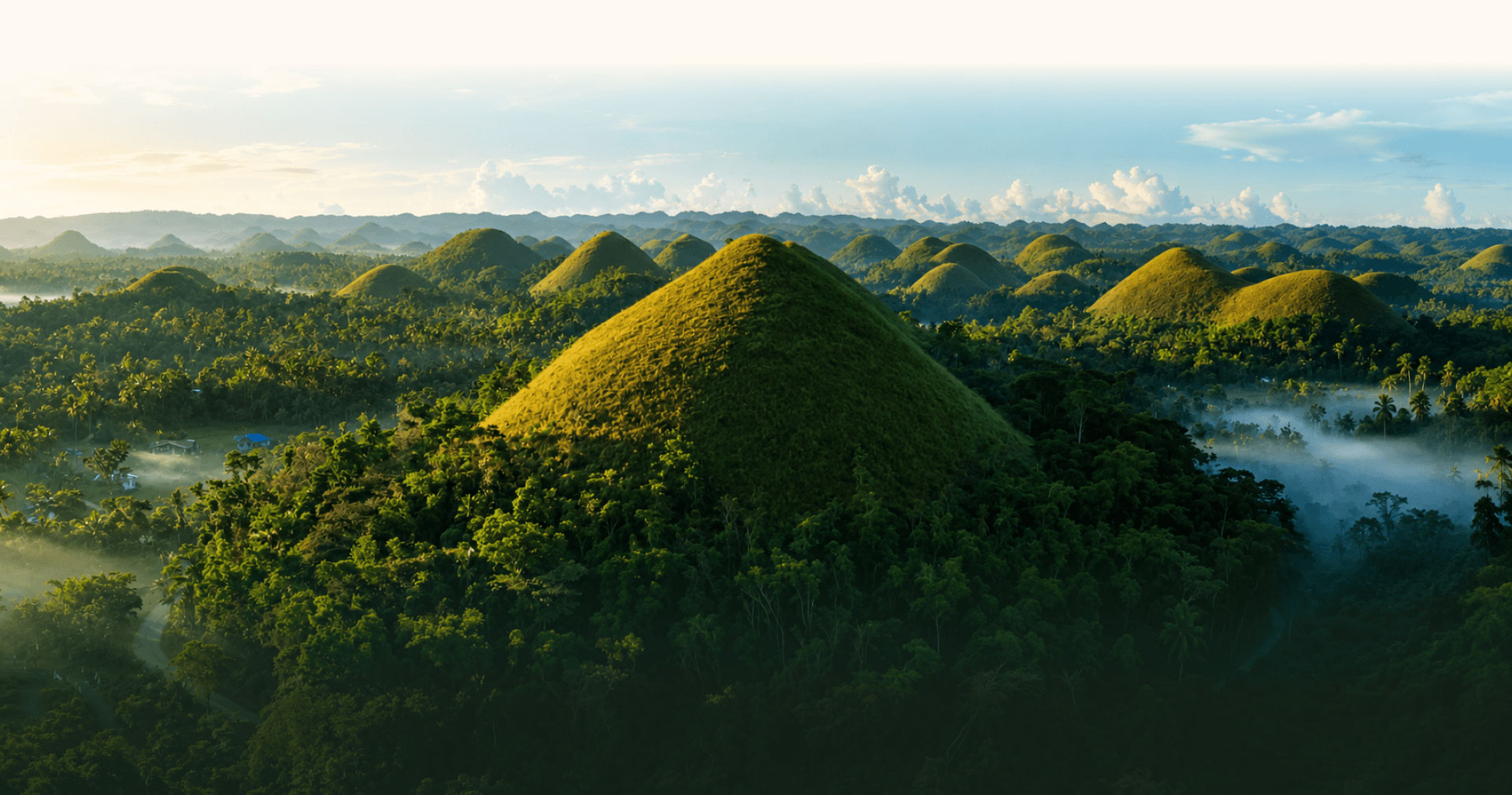
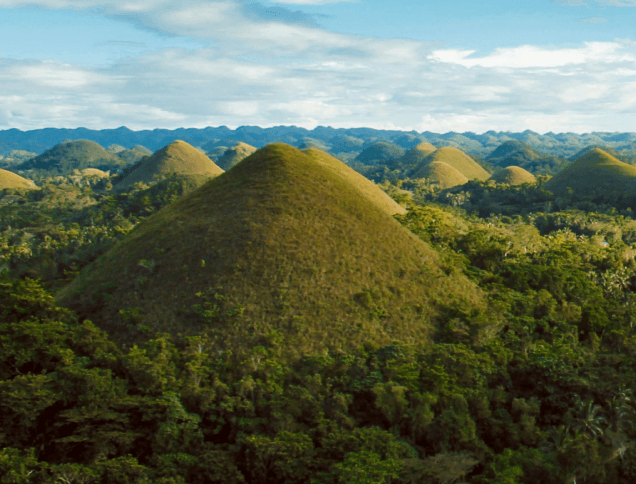
The unique karst landscape is composed of smooth, uniformly shaped conical isolated hills that cover a vast area in the central portion of the island.The site was once a platform of thick widespread buildup of coral reefs that thrived during the Pliocene, approximately 2-5 million years ago and later to form a sedimentary formation.Soon, this limestone formation was raised above the sea level and fractured. Rainwater, streams and groundwater dissolved the limestone, gradually forming the present landscape of cone karst.
Hinagdanan Cave
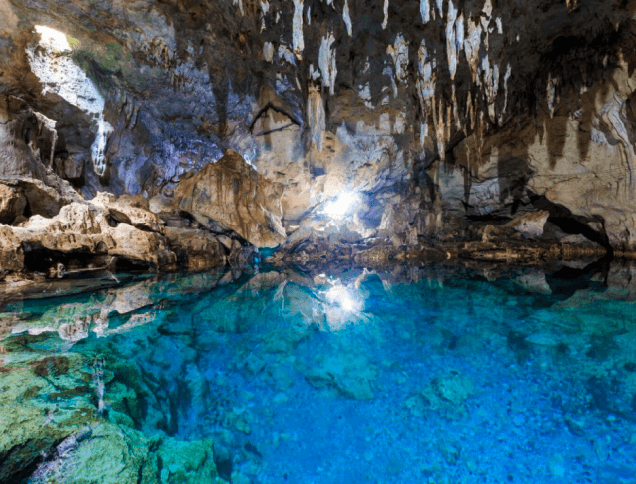
The Hinagdanan Cave is one of the many wondrous karst caves in the Province of Bohol. This cave was accidentally discovered by a farmer while clearing his land. Stumbling on a hole in the ground, curious, he dropped a stone and heard a splash. He built a ladder, “hagdan,” and went down to find the cave’s hidden beauty, hence the origin of its name Hinagdanan.Its boasts of several stalactite and stalagmite formations and a clear lagoon that is about 10 to 20 meters deep. Aside from its awe-inspiring natural beauty, Hinagdanan also played a significant role in the history of Bohol. The cave was used during Second World War as a hideout by locals to escape from the Japanese Imperial Army.
Sunlit White Shores
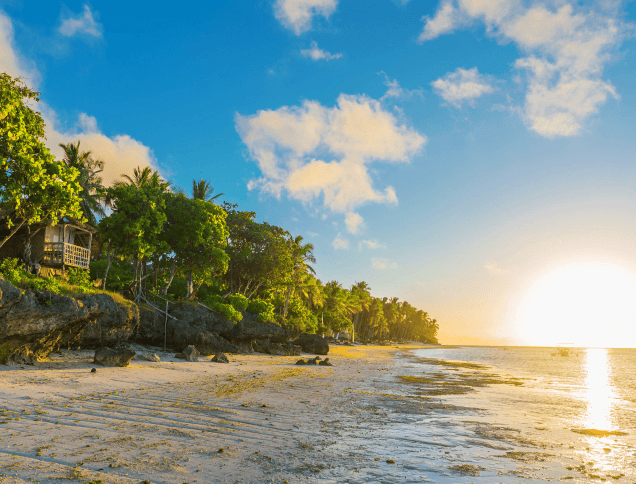
Panglao’s white beaches are among Bohol’s most popular natural attractions, known for their powdery white sand, clear turquoise waters, and relaxing tropical atmosphere.Famous beaches such as Alona Beach and Dumaluan Beach offer visitors opportunities for swimming, snorkeling, island hopping, and watching breathtaking sunsets along the coast.Beyond their scenic beauty, Panglao’s beaches are also gateways to Bohol’s rich marine biodiversity and eco-tourism experiences. With vibrant coral reefs, nearby diving spots, and warm local hospitality, Panglao continues to be a favorite destination for travelers seeking both adventure and relaxation in the Philippines.
Danajon Bank Double Barrier Reef
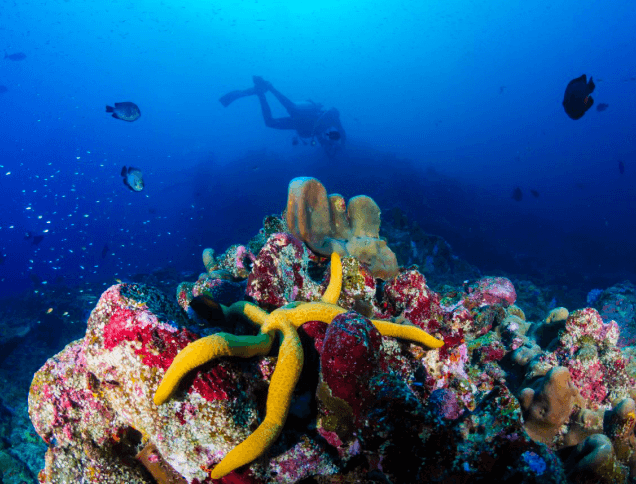
Parallel to the northeast coast of Bohol is a very rare geological formation known as the Danajon Double Barrier Reef. It is one of the 6 double barrier reefs in the world, one of 3 in Indo-Pacific and is the only one of its kind in the Philippines and Southeast Asia.It is composed of numerous but diverse islets and reef patches joining together into an inner Calituban and outer Caubyan barrier reef. Because of its unique coral reef ecology, it is a major breeding ground and habitat of many different species of fishes, marine mammals, mollusks, and seagrasses.
Can-Umantad Falls
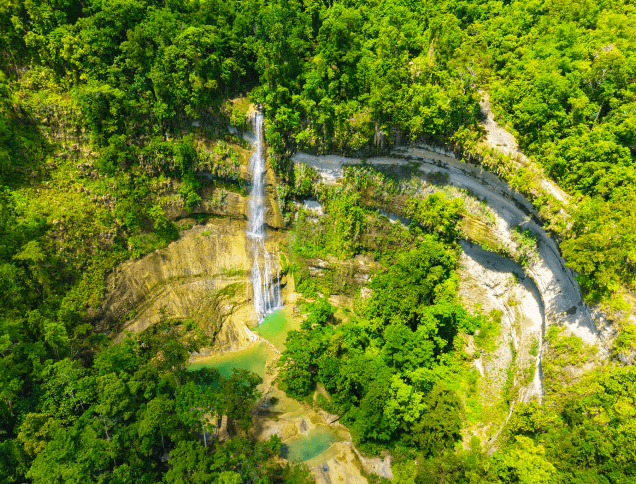
Can-umantad Falls is the tallest waterfall in Bohol, located in the mountain town of Candijay in the island’s eastern region. Surrounded by lush greenery and rice terraces, the falls cascade gracefully into cool natural pools, creating a peaceful escape for visitors seeking nature and adventure. Its refreshing waters and scenic landscape make it one of Bohol’s hidden gems and a favorite destination for hiking, swimming, and countryside exploration.Beyond its beauty, Can-umantad Falls reflects the rich natural environment of Bohol’s inland communities, where rivers, forests, and agricultural landscapes come together in harmony. The journey to the falls also offers travelers a glimpse of rural Boholano life and the island’s quieter, untouched side.
Tiny Wonders
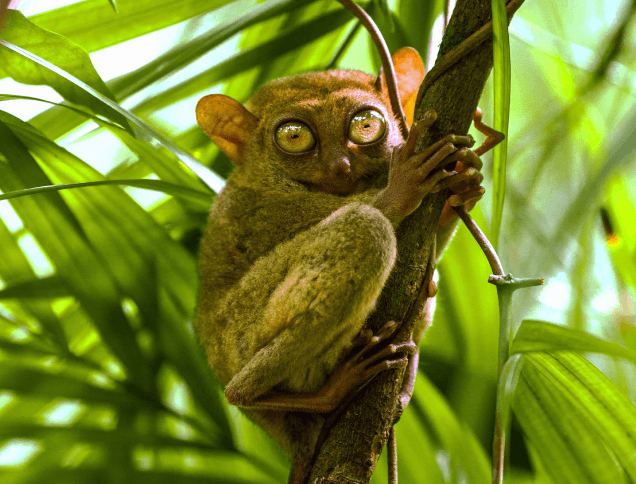
The Philippine tarsier is one of Bohol’s most iconic native creatures, recognized for its tiny body, soft brown fur, and remarkably large eyes adapted for nocturnal life. Found in the island’s remaining forests and conservation areas, these shy primates are known for their ability to leap between trees with agility and precision. Their quiet nature and unique appearance have made them an important symbol of Bohol’s wildlife and conservation efforts.Bohol’s forests are also home to a rich variety of native wildlife, including colorful birds, flying lemurs, geckos, butterflies, and other tropical species that thrive within the island’s lush ecosystems. These forest habitats play a vital role in preserving Bohol’s biodiversity and natural balance, offering visitors a chance to experience the island’s wildlife in a peaceful and protected environment.
Beneath Blue Waters
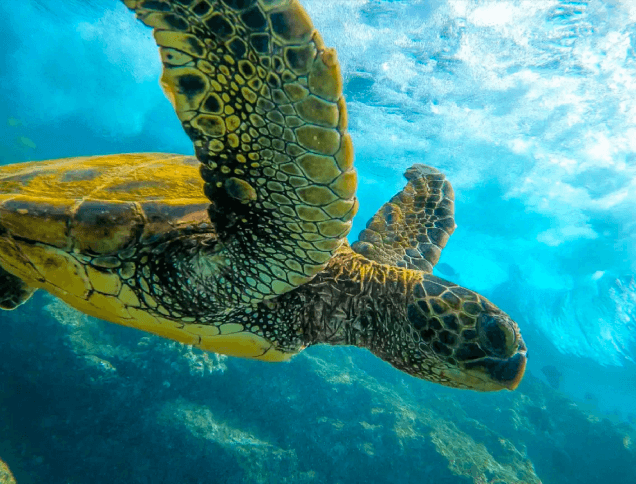
Bohol’s marine biodiversity is one of the island’s greatest natural treasures, with vibrant coral reefs, crystal-clear waters, and diverse marine life thriving across its coastal ecosystems. Popular diving and snorkeling destinations such as Balicasag Island and Pamilacan Island are home to sea turtles, colorful reef fish, dolphins, and a wide variety of coral species that attract nature lovers and ocean explorers from around the world.These rich marine habitats support both local communities and conservation efforts, helping protect the delicate balance of Bohol’s underwater ecosystems. Through eco-tourism and marine sanctuaries, Bohol continues to preserve its coastal beauty while offering unforgettable experiences beneath the sea.